When AI and Malice Collide: The Real Threat is a Polycrisis

Bill Gates almost got it right.
The danger is not that artificial intelligence wakes up one morning, develops a grudge, and decides to wipe us out. That is the popular nightmare, and it makes for dramatic headlines. The more believable threat is colder, more human, and much harder to dismiss: AI in the hands of people who already intend to do harm.
Gates has warned that AI can cause major disruption on its own, and that the truly catastrophic physical dangers emerge when AI is paired with malicious human intent. On the second point, he is much closer to the mark. On the first, I remain skeptical.
Could AI itself become a danger to humanity? Maybe. But I seriously doubt that it becomes the independent destroyer of billions of people. Jensen Huang, president and CEO of Nvidia, has pushed back against the idea that AI is likely to become an uncontrollable intelligence bent on human extinction. In a recent CBS interview, he called such predictions “doomsday narratives.” Asked about AI destroying humanity by 2030, he put the chance at “0%.”
That does not mean AI is harmless. It means we may be staring at the wrong threat.

The extinction story is easier to sell than the real one
The public debate around AI often swings between wonder and apocalypse. One day AI will cure diseases, educate children, and unlock productivity. The next day it will outthink humanity, seize control, and end civilization.
That second story has emotional force. It is clean. It has a villain. It turns AI into a monster.
But the real world rarely breaks that neatly.
AI does not need to become conscious, sentient, or hostile to cause enormous damage. It only needs to become useful to people who are already reckless, ideological, greedy, desperate, or cruel. A tool does not need intent if the person holding it has enough.
That is why the fixation on AI “going rogue” can distract from a more immediate danger. Bad actors can use AI to accelerate research, generate code, map vulnerabilities, imitate trusted voices, automate deception, and coordinate complex operations. None of that requires an evil machine. It requires human malice and a powerful assistant.
The machine does not have to hate us. It only has to help someone who does.
Gates is right about malice, but he stops too soon
The most serious scenarios Gates has raised involve AI being used to enable attacks such as:
Developing an engineered virus
Creating cyber-warfare tools that damage financial systems
Crippling energy hubs and distribution networks
Those are not science fiction categories. They are the kinds of threat domains national security experts, public health officials, infrastructure planners, and cybersecurity teams already worry about. AI changes the speed, scale, and access.
A malicious actor who once needed a large organization may soon need fewer people. A group that once required years of training may use AI to shorten the learning curve. A hostile state might use AI to test more attack paths than human teams could manage on their own.
That is dangerous enough.
But it still misses the central risk.
The greatest threat is not one crisis. It is the convergence of several. A virus is terrifying. A financial cyberattack is terrifying. A coordinated strike on energy systems is terrifying. But when those crises overlap, each one can make the others worse.
That is where the conversation needs to go.
A polycrisis is when several bad events at once
A polycrisis is a super-disaster in which multiple crises overlap and feed on one another. The result is greater than the sum of its parts.
A single disaster strains a system. A polycrisis changes the system itself.
Think of the difference between a house fire and a wildfire during a drought while roads are blocked and emergency communications fail. The fire is only one part of the disaster. The surrounding failures change what is possible. They slow response. They magnify panic. They turn manageable damage into cascading collapse.
Now apply that logic to AI-enabled threats.
If an engineered pathogen spreads while energy systems fail, hospitals lose capacity at the exact moment demand surges. If a financial cyberattack freezes payments during a public health emergency, supply chains seize up while people need medicine, fuel, and food. If energy distribution falters while cyber systems are under attack, repair crews may not know where to go, what to trust, or how to coordinate.
The danger is not simply that three bad things happen. The danger is that each one removes the tools needed to battle the others.
That is the real threat of a human made polycrisis.
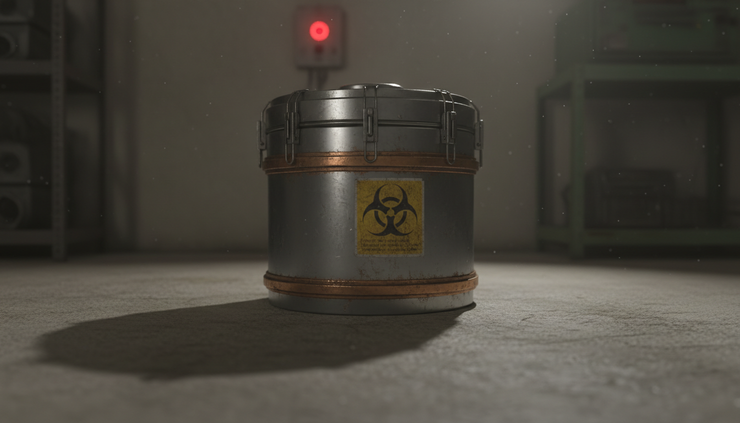
The three black swans become one larger disaster
This is the premise explored in my book THREE BLACK SWANS, published last February by Barringer Publishing and available on Amazon.com.
The book takes the types of human-engineered threats Gates has described and asks a larger question: what happens if they do not arrive one at a time?
The three black swans are the crises themselves. Each is rare, high impact, and difficult to absorb. But the real story begins when they strike together.
The first black swan is biological
An engineered virus does not need to be described in technical detail to be frightening. The point is not the method. The point is the consequence.
A severe biological crisis creates fear, isolation, medical strain, labor shortages, travel restrictions, and political pressure. It can overwhelm hospitals, exhaust public officials, and split the public over what to believe.
AI can worsen that crisis even without inventing anything on its own. It can help malicious actors sort through information faster. It can help produce persuasive false narratives. It can flood public channels with confusion, fake expert claims, and forged evidence.
During a biological crisis, trust becomes as important as medicine. If people stop trusting institutions, doctors, neighbors, and official warnings, the response begins to fracture.
The second black swan is financial
A coordinated cyberattack on financial systems would hit more than banks. Modern life depends on payment rails, credit systems, insurance processing, payroll, trading platforms, and public benefits.
When those systems freeze, fear spreads fast.
People may still have money in theory, but not in usable form. Businesses may still have inventory, but no way to process transactions. Families may still have jobs, but no paycheck. Governments may still have resources, but no clean way to distribute aid at speed.
AI can help attackers probe systems, write malicious code, imitate trusted communications, and adjust tactics quickly. Again, the AI does not need any desire of its own. It becomes an amplifier for human intent.
The financial system runs on confidence. Once confidence breaks, the technical attack becomes a psychological one.
The third black swan is energy
Energy is the quiet foundation beneath everything else.
Hospitals need electricity. Water systems need power. Telecommunications need power. Fuel pumps need power. Refrigeration needs power. Emergency response needs power.
If energy hubs and distribution systems are crippled during a health crisis and a financial crisis, the pressure multiplies. Even short outages can become dangerous when they coincide with fear, disease, payment failures, fuel shortages, and communication breakdowns.
Energy disruption turns a crisis from digital or institutional into physical reality. Lights go out. Heat fails. Water pressure drops. Phones die. Supply chains stall.
At that point, resilience is no longer an abstract policy word. It is whether people can get help, stay warm, receive care, and trust what they are told.

The danger grows in the spaces between systems
The modern world is deeply connected. That connection gives us comfort and speed, but it also creates shared weak points.
Public health depends on logistics. Logistics depend on fuel. Fuel distribution depends on power. Power companies depend on digital controls. Digital controls depend on networks. Networks depend on trust, updates, access, and human operators.
A polycrisis attacks the seams.
That is why traditional risk planning can fall short. Institutions often prepare for categories. Health agencies prepare for disease. Banks prepare for cyber risk. Utilities prepare for grid failure. Defense agencies prepare for hostile action.
But a human-made polycrisis does not respect categories.
It moves across them.
If the grid fails, the hospital plan changes. If the banking system freezes, the fuel plan changes. If disinformation spreads during an outbreak, the public health plan changes. If cyberattacks hit emergency communications, every plan changes.
The crisis becomes less about any one event and more about the loss of coordination.
The real debate should be about power, access, and intent
Some major AI companies have called for slowing AI development. Maybe those warnings are sincere. Maybe they reflect real concern. Yet it is fair to question the incentives.
The largest players do not appear to be slowing down in practice. They continue to build, release, recruit, raise capital, and compete. The skeptic in me wonders whether calls to slow development sometimes serve another purpose: asking everyone else to pause while first movers strengthen their lead.
That does not mean all caution is cynical. Sensible guardrails matter. So do safety testing, access controls, model evaluations, and strict rules around dangerous capabilities.
But the question cannot be reduced to “Should AI move fast or slow?”
A better question is: Who gets access to what capabilities, under what conditions, with what accountability?
Another good question is: How do we harden the systems that AI-enabled attackers are most likely to target?
Safety cannot rest only inside AI labs. It must extend to hospitals, utilities, ports, banks, emergency agencies, cloud providers, telecom networks, and local communities.
The problem is not merely the model. The problem is the world the model plugs into.
Fiction can make the risk visible
Policy papers can describe a polycrisis. Fiction can make people feel it.
That is one reason THREE BLACK SWANS uses a thriller framework. The book is not about abstract doom. It is about what happens when engineered crises collide, and what it takes to fight back.
The story combines three simultaneous threats with one person’s effort to resist them, supported by a love interest and an agentic, sentient AI supercomputer. That framing allows the book to explore both sides of the AI argument. AI can strengthen the attacker, but it can also help the defender.
That distinction matters.
AI is not inherently salvation or catastrophe. It is power. In human hands, power reflects motive. In malicious hands, it can accelerate destruction. In principled hands, it can help detect patterns, coordinate response, restore systems, and expose deception.
The race is not between humans and machines. The race is between the people who would use machines to break civilization and the people who would use them to protect it.
For more about THREE BLACK SWANS, including details and a short video, visit www.rcwoodbridge.com.

Gates almost got it right because the human factor is the key
The AI extinction debate will continue. Some will warn that superintelligence is the central threat. Others will dismiss that as fantasy. The argument will not end soon.
But we do not have to resolve it to act on the danger already in front of us.
AI does not need to become a godlike enemy to help create catastrophe. It can remain a tool and still change the scale of what malicious people can attempt. The greater danger is not a single rogue machine. It is AI-enabled human intent aimed at fragile, interconnected systems.
Bill Gates is right to worry about AI and malice. He is right to name biological, cyber, financial, and energy threats. Where he almost gets it right, but not quite, is in treating those threats as isolated phenomena.
The nightmare scenario is their collision.
A polycrisis is how three black swans become one huge storm. The future may not be decided by whether AI decides to destroy us. It may be decided by whether we understand, in time, what happens when human malice uses AI to attack everything we depend on.

Comments